Callaloo
On Literary Becoming

I recently began work as areas editor (in non-fiction) for Callaloo literary journal, which has stood as the premiere literary journal of Black diaspora letters in the U.S. for the past several decades. Founded by Dr. Charles Rowell to provide a platform for Black southern writers in the 1970s, Callaloo sought to redress an imbalance. In the wake of the Great Migration of Black Americans from the south to the Northeast, Midwest and West Coast, much of Black America’s intellectual energy had migrated out of the south as well. Rowell sought to shift that intellectual tide. And while Callaloo certainly played a part in that shift, probably far more influential have been the cultural, educational and economic forces that have seen a net return migration of Black folks to the southern states in the 21st century. Today it would be hard to argue that, for instance, Los Angeles or Oakland is more a center of Black intellectual energy than is Atlanta.
Even as the Black South rose (not again, for the first time), Callaloo’s scope also broadened, not just to the rest of the States but across waters, becoming a journal of Black Diasporan experience so influential that by the time I started seeing myself as a seriously viable writer in the 2010s, every emerging Black writer I knew wanted to find their way into its pages or its workshops or both.
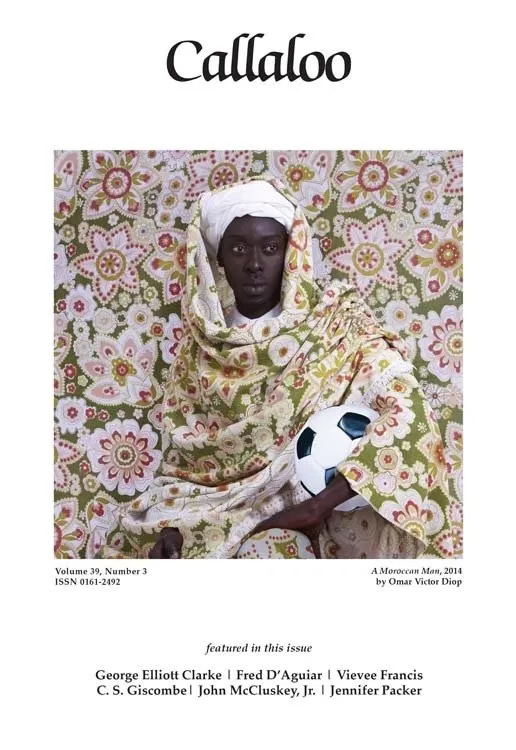
To the latter, I owe a great debt of gratitude, which is in part why I’ve taken up this editorial role. You see, by the 2010s Callaloo was holding thrice annual workshops for emerging Black writers at Oxford University, the University of the West Indies in Kingston, Jamaica, and at Brown University in the States. On my second attempt at entry, I ended up being accepted to the workshop at Brown, where I took classes from Ravi Howard alongside students who were themselves already accomplished writers like Toni Ann Johnson (Light Skin Gone to Waste), superstars in the making like Nafissa Spires-Thompson (Heads of the Colored People), and the most talented writer under 25 whom I’ve personally encountered, Tyriek White (We Are a Haunting), whose work put us all in tears, to shame, and in anticipation. Not to mention Hanif Abdurraqib, who was there as a poet but who made it over to our prose cohort quite a bit. Within a year, he would become one of the best and best known essayists in America.
We hope to bring back the workshops in the future, but for now the focus is on the journal. Led by executive editor Kyla Kupferstein Torres and the other areas editors and readers, I’m looking forward to playing some part in bringing to the fore brand new, as well as newly nuanced, Black voices from across the diaspora.
Now that I’m winding this essay down, I’m realizing that it’s a story of literary becoming. That becoming in context of Callaloo is a story of Black becoming and of an institution that for decades has forged the foundations of many a Black writer and editor. But just as much as it is a Black story, it is important to remember that our stories are everybody’s stories, not because we’re all the same but because we should be able to see our human journeys and our humanity within each other. It’s precisely this context-carrying universalism that has always been at the core of the literary arts, and it is precisely this ethos that an era unfortunately marred by blood and soil nativism disregards to the detriment of all of us.
*Photograph of librarian by Brett Stirton , Getty Images